
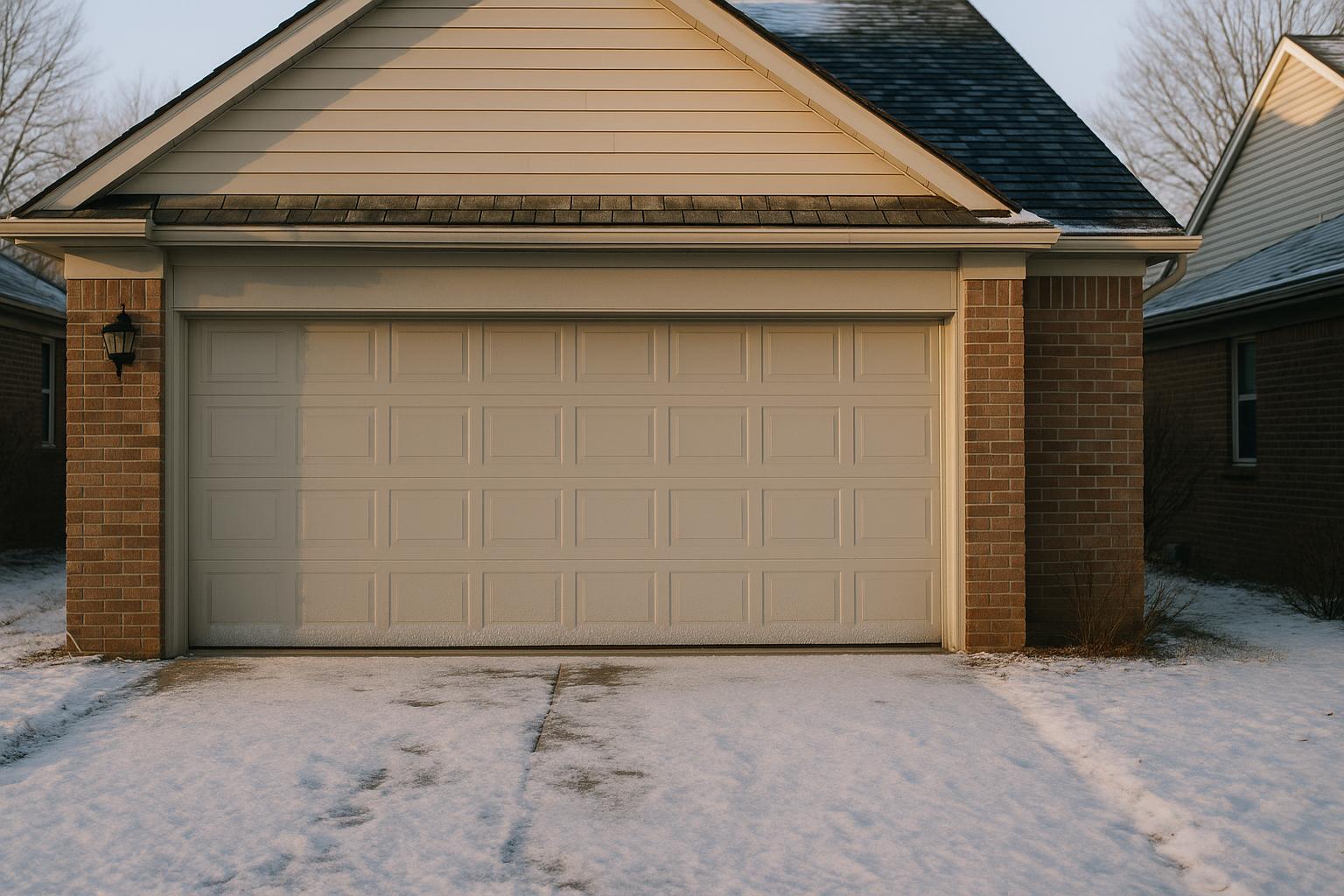
Winter and Your Garage Door: A Common Southfield Problem
If you've lived in Southfield through even one Michigan winter, you know the drill. Temperatures plunge, snow piles up, and one morning you press the button on your garage door opener and… nothing happens. Or maybe the door starts to move, groans, and stops halfway. Or it won't budge at all.
A garage door that won't open in cold weather is one of the most common calls we get at Southfield Overhead Garage Door between November and March. The good news is that most cold-weather garage door problems have straightforward causes — and solutions. Let's walk through what's happening and what you can do about it.
Why Cold Weather Affects Your Garage Door
Your garage door is the largest moving part of your home, and it relies on a system of metal springs, tracks, rollers, cables, and an electric opener working together smoothly. Cold weather can interfere with almost every one of those components.
1. Metal Contracts in the Cold
When temperatures drop below freezing, the metal parts of your garage door system contract slightly. This can cause springs to become more brittle, tracks to tighten, and hardware to stiffen. The result is a door that moves sluggishly or requires more force to operate than your opener can provide.
2. Lubricant Thickens or Dries Out
The lubricant on your springs, rollers, and hinges can thicken in extreme cold, creating resistance that makes the door harder to move. In some cases, old lubricant dries out entirely, leaving metal grinding against metal. This puts extra strain on your opener motor and can lead to premature wear on moving parts.
3. The Weatherstripping Freezes to the Ground
This is probably the most common winter garage door issue in the Southfield area. The rubber weatherstripping along the bottom of your door can freeze to the concrete floor or driveway when moisture gets trapped underneath and temperatures drop overnight. When you try to open the door, it's literally stuck to the ground.
4. Your Opener Loses Power or Sensitivity
Cold temperatures can affect the electrical components of your garage door opener. Some openers have force settings that may need adjustment in winter, and power surges from winter storms can trip breakers or damage opener circuits.
What You Can Do Right Now
Before you call a professional, there are a few safe steps you can try on your own when your garage door won't cooperate in the cold.
Break the Ice Seal Carefully
If your door is frozen to the ground, do not keep pressing the opener button. Repeated attempts can burn out the motor, strip the gears, or tear the weatherstripping right off the door. Instead, try these steps:
- Use a flat-edged shovel or a putty knife to gently chip away the ice along the bottom seal.
- Pour warm (not boiling) water along the base of the door to melt the ice. Dry the area afterward if possible to prevent refreezing.
- Apply a silicone-based lubricant or a commercial de-icer to the weatherstripping to prevent future sticking.
Re-Lubricate Moving Parts
If your door is moving but sounds strained or sluggish, the lubricant may need refreshing. Use a silicone-based or lithium-based garage door lubricant — not WD-40, which is a solvent, not a long-term lubricant. Apply it to:
- Torsion springs
- Roller bearings
- Hinges
- The track where rollers make contact
This simple step can make a dramatic difference in how smoothly your door operates in cold weather.
Check the Power Supply
If your opener doesn't respond at all, check the basics first. Make sure the unit is plugged in, the outlet has power, and no breakers have tripped. Also check the batteries in your remote — cold weather drains batteries faster than you might expect.
When to Call a Professional
Some cold-weather garage door problems go beyond what a homeowner should tackle alone. Call a professional if you notice any of the following:
- The door is visibly off-track. Forcing a misaligned door can cause serious damage or create a safety hazard.
- A spring appears broken or stretched. Garage door springs are under extreme tension. A broken spring in cold weather is more common because the metal becomes brittle. Never attempt to replace springs yourself.
- The opener motor runs but the door doesn't move. This could indicate a stripped gear, a broken cable, or a disconnect between the opener and the door.
- The door opens partway and stops. This often points to a balance issue or a problem with the springs that requires professional adjustment.
- You hear loud popping or snapping sounds. This could mean a spring or cable has broken, which requires immediate professional attention.
At Southfield Overhead Garage Door, we handle winter service calls throughout Southfield, Farmington Hills, Royal Oak, Beverly Hills, and the surrounding communities. We know how Michigan winters treat garage doors, and we come prepared to diagnose and fix the problem on the spot.
Preventing Cold-Weather Garage Door Problems
The best way to avoid getting stuck with a frozen or malfunctioning garage door is to prepare before the cold hits. Here's what we recommend to our customers:
- Schedule a fall maintenance visit. A professional tune-up before winter can catch worn springs, dried-out lubricant, and other issues before they become emergencies.
- Replace old weatherstripping. If your bottom seal is cracked, brittle, or doesn't sit flush against the ground, replace it before freezing temperatures arrive. A good seal keeps cold air and moisture out of your garage.
- Keep the area around the door clear. Shovel snow and ice away from the base of your garage door regularly. Standing water that freezes overnight is the number one cause of a frozen door.
- Insulate your garage. An insulated garage door and a reasonably sealed garage help maintain a more stable temperature, reducing the stress on your door's components.
- Test your door monthly. Open and close it manually (after disconnecting the opener) to check the balance. A well-balanced door should stay in place when lifted halfway. If it falls or rises on its own, the springs need attention.
Don't Let Winter Win
A garage door that won't open on a freezing Southfield morning is more than an inconvenience — it can make you late for work, leave your car trapped, or even compromise the security of your home. Most cold-weather garage door issues are preventable with a little preparation, and the ones that aren't can usually be fixed quickly by an experienced technician.
If your garage door is giving you trouble this winter — or if you want to make sure it doesn't — give Southfield Overhead Garage Door a call. We offer honest pricing, prompt service, and we stand behind every repair we make. No surprises, no runaround — just a garage door that works when you need it to.