
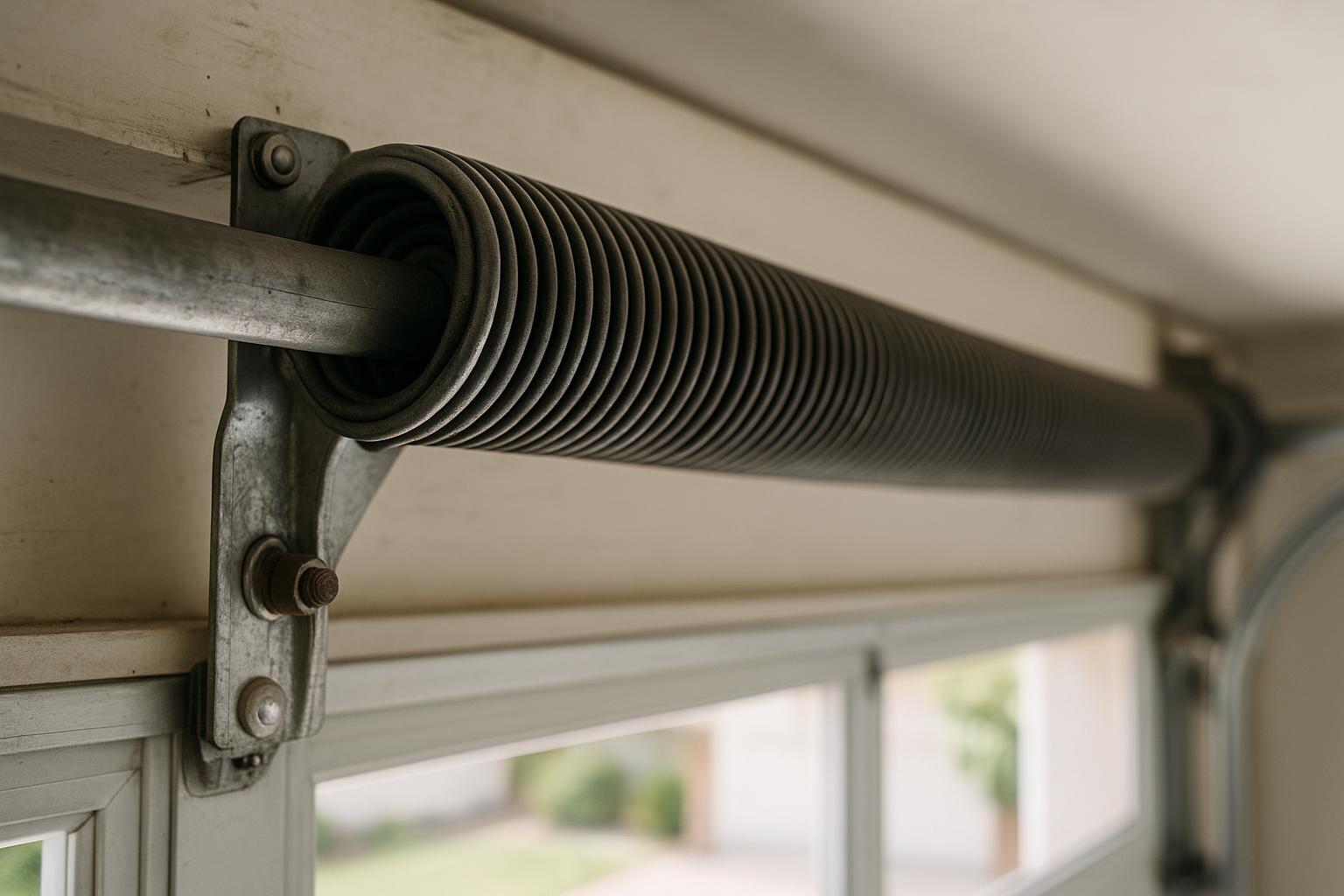
Your Garage Door Springs Are Doing More Work Than You Think
Most homeowners in Southfield don't think much about their garage door springs — until something goes wrong. But those tightly wound coils mounted above your door are arguably the hardest-working components in the entire system. They bear the full weight of the door every time it opens and closes, which for the average household means over a thousand cycles per year.
When springs start to wear out or break, your garage door can become difficult to open, dangerously heavy, or completely inoperable. At Southfield Overhead Garage Door, we handle spring replacements regularly for homeowners across Southfield, Farmington Hills, Beverly Hills, and the surrounding area. Here's how to spot the warning signs before a full failure catches you off guard.
Understanding the Two Types of Garage Door Springs
Before diving into the warning signs, it helps to know which type of spring system your garage door uses. Most residential doors in the Southfield area use one of two types:
- Torsion springs: These are mounted horizontally on a metal shaft above the garage door opening. They use torque to lift the door and are the more common type found on modern residential doors.
- Extension springs: These run along the horizontal tracks on either side of the door. They stretch and contract to assist with lifting. They're more common on older or lighter doors.
Both types have a limited lifespan, typically rated for around 10,000 cycles. If you use your garage door multiple times a day — which most families do — that lifespan can run out faster than you'd expect.
7 Warning Signs Your Garage Door Springs Are Failing
1. The Door Feels Heavier Than Usual
Try lifting your garage door manually by pulling the emergency release cord and raising the door by hand. A properly balanced door with healthy springs should feel relatively light — around 10 to 15 pounds of effort. If the door feels extremely heavy or you can barely lift it, the springs are likely losing tension and no longer counterbalancing the door's weight effectively.
2. The Door Opens Unevenly or Crooked
If one spring is weaker than the other — or if one has already broken — the door may rise unevenly, tilting to one side. This puts extra stress on the opener, the tracks, and the remaining spring. If you notice your door looking crooked as it goes up, don't ignore it. Continued use in this condition can cause cascading damage to other components.
3. You Heard a Loud Bang From the Garage
A broken torsion spring releases a tremendous amount of stored energy all at once, producing a loud bang that many homeowners mistake for something falling or even a break-in attempt. If you heard a sudden loud noise from your garage and now the door won't open, there's a strong chance a spring has snapped. You'll usually be able to see the break — a visible gap in the coil above the door.
4. The Opener Struggles or Stops Mid-Cycle
Your garage door opener is designed to work with the springs, not to do all the heavy lifting on its own. When springs weaken, the opener has to work much harder. You might notice it straining, moving slower than usual, or stopping partway through a cycle. Running the opener under this kind of stress will shorten its lifespan significantly.
5. Visible Gaps or Stretched Coils
Take a moment to visually inspect your springs. On torsion springs, a clear gap in the coil means the spring has broken. On extension springs, look for signs of stretching — the coils will appear elongated with wider spacing between them compared to when they were new. Rust and corrosion are also red flags, as they weaken the metal and accelerate failure.
6. The Door Slams Shut Quickly
Springs control the speed at which your garage door closes. When they lose tension, the door can drop much faster than it should. This is a serious safety concern, especially for households with children or pets. A rapidly closing door can cause injury or damage to vehicles and belongings.
7. Your Springs Are More Than 7-10 Years Old
Even if everything seems to be working fine, age matters. If your springs are approaching the decade mark and you've never had them replaced, they're living on borrowed time. Proactive replacement is always safer and less expensive than dealing with a sudden break.
Why You Should Never Replace Garage Door Springs Yourself
We understand the DIY spirit — it's strong here in Michigan. But garage door springs are one of the few home repair jobs that professionals universally recommend leaving to the experts. Here's why:
- Extreme tension: Torsion springs are wound under enormous pressure. A spring that releases unexpectedly can cause severe injury or even death.
- Specialized tools required: Proper spring replacement requires winding bars, vice grips, and precise calibration that most homeowners don't have access to.
- Matching specifications: Springs must be matched to the exact weight and size of your door. The wrong spring can cause balance issues, premature wear, or immediate failure.
At Southfield Overhead Garage Door, our technicians handle spring replacements safely and efficiently. We carry a wide range of spring sizes on our trucks so most repairs can be completed in a single visit.
What to Expect During a Professional Spring Replacement
When you call us for a spring replacement, here's what the process typically looks like:
- We inspect the entire door system — not just the springs — to identify any related issues.
- We measure and match the correct spring specifications for your specific door.
- We safely release the tension on the old springs and remove them.
- We install the new springs, wind them to the proper tension, and balance the door.
- We test the door through several full cycles to ensure smooth, safe operation.
- We lubricate moving parts and check the opener's force settings.
The whole process usually takes about an hour, and we always clean up before we leave.
Don't Wait for a Spring to Break
A broken garage door spring is more than an inconvenience — it can leave your car trapped in the garage, compromise your home's security, and create a genuine safety hazard. If you've noticed any of the warning signs we've described, or if it's simply been a long time since your springs were inspected, it's worth having a professional take a look.
Homeowners throughout Southfield, Royal Oak, Berkley, and Lathrup Village trust Southfield Overhead Garage Door for honest assessments and fair pricing on spring repairs and replacements. We show up on time, explain what we find, and never push services you don't need.
Give us a call today to schedule an inspection or spring replacement. A little attention now can prevent a much bigger problem later.